The Ziwu Meridian Style Needling is a perfect combination of the sum of theory and practice, adjusting the shape and treating spirit, maintaining integrity and innovation.
Language: Mandarin Chinese
Time: 2.5 hours
The Ziwu Meridian Style Needling is an enhanced version of Liu Wei's original Ren Si Du Wu Needle Method: Du Wu can penetrate all yang, and Ren Si can adjust the triple burners, and the vertical and horizontal superposition of the corresponding energy fields, a set of unique acupuncture methods formed in the study of classics and clinical evidence. It can not only be used as a key link by professor Liu, and become a simple and effective treatment method used alone; it can also be derived from special acupuncture methods such as "fire in water, gasification in the triple burners, seven needles in Yafeng, and three guan passes to yang"; supplemented by Feijingzouqi techniques.
The Ziwu Meridian Style Needling is a perfect combination of the sum of theory and practice, adjusting the shape and treating spirit, maintaining integrity and innovation.
Personal profile
Professor Liu Wei, MD is a licensed TCM physician in Minnesota, USA, a well-known TCM acupuncturist and professor of acupuncture and moxibustion in the United States, and a tutor of the OCOM doctoral class in the United States. He is also the first batch of distinguished professors and a member of the expert committee of the Sino-American Institute of Acupuncture and Rehabilitation, Guangzhou Zhong Visiting professor at the University of Medicine, New Zealand College of Traditional Chinese Medicine and other schools. He is one of the first batches of the top 10 overseas Chinese medicine experts to be shortlisted for the "Hundred Talents and Hundred Items" project of Chinese medicine for overseas Chinese and overseas Chinese One of the treasure gift experts.
Professor Liu Wei is diligent in his studies, has a solid foundation, and respects the classical acupuncture style. He has created five acupuncture systems including Liu's scalp acupuncture, Liu's abdominal acupuncture, tension traction acupuncture, and linkage acupuncture, and dozens of original acupuncture methods, forming his own with a unique style and clinical diagnosis and treatment methods, he enjoys the reputation of "acupuncture master" and has long been committed to promoting the inheritance and development of traditional acupuncture.
Event and Course Registration — Cancellation and Refund Policy
Recorded/On-Demand Online Courses
Once purchased, recorded or on-demand online course content is made available to you immediately. Because access to this digital content begins at the time of purchase, no refunds will be issued for recorded online course purchases, regardless of whether the content has been accessed or completed. This policy is disclosed to you prior to purchase.
Live Events and Courses (In-Person or Live Online)
If you need to cancel your registration for a live event or course, refunds will be issued according to how far in advance ATCMA receives your written cancellation notice, relative to the scheduled date of the event or course:
Notice Received | Refund |
60 days or more before the event/course date | 100% of the amount paid |
30–59 days before the event/course date | 50% of the amount paid |
7–29 days before the event/course date | 25% of the amount paid |
Less than 7 days before the event/course date | No refund |
Cancellation notices must be submitted in writing to info@atcma.org. The date ATCMA receives your notice — not the date it is sent — determines which refund tier applies.
If ATCMA Cancels an Event or Course
If ATCMA cancels a scheduled event or course for any reason, all registered participants will receive a full refund of the amount paid, regardless of the notice periods above. ATCMA is not responsible for any related costs incurred by participants, such as travel or accommodation.
Processing
Approved refunds will be issued within 15 business days of ATCMA receiving your cancellation notice (or of ATCMA's own cancellation of the event/course), using the same payment method originally used, where possible.
Related Courses
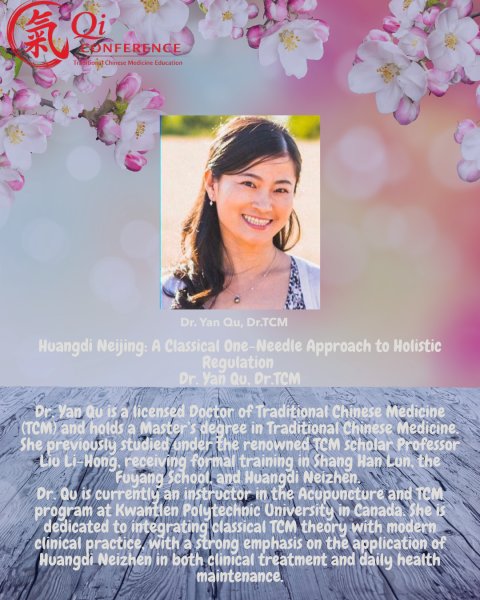
Qi Conference -Huangdi Neizhen: A Classical One-Needle Approach to Holistic Regulation
Huangdi Neizhen is rooted in the holistic medical philosophy of the Huangdi Neijing, with Six-Channel (Liu Jing) Pattern Differentiation serving as its core clinical framework. Emphasizing internal regulation for external disorders and a minimalist needling approach, this method translates classical theory into practical clinical application.
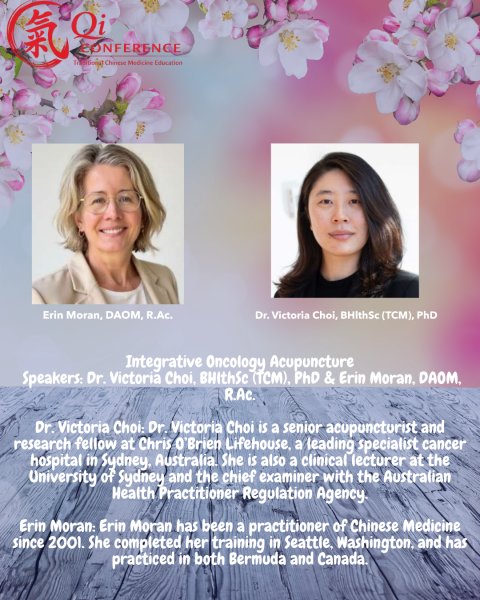
Qi Conference -Integrative Oncology Acupuncture
Grounded in current research and enriched by extensive clinical experience in both private practice and hospital-based integrative oncology settings, this workshop is designed to equip practitioners with the confidence to provide evidence-informed, supportive oncology care.
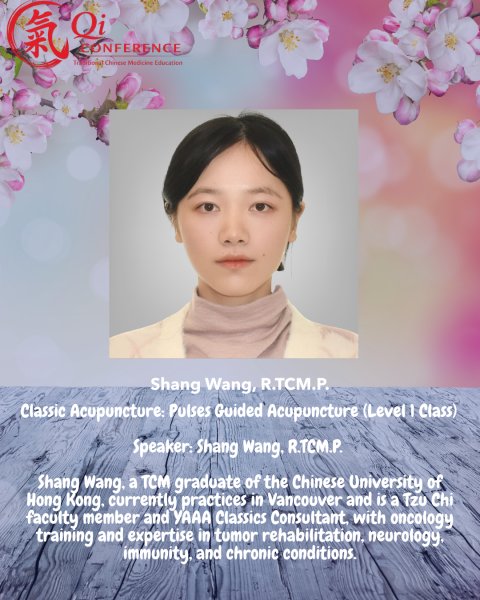
Qi Conference -Classic Acupuncture: Pulses Guided Acupuncture (Level1 Class)
Pulse-guided acupuncture is a fundamental classical acupuncture technique rooted in the Yellow Emperor’s Inner Classic and the Classic of Difficult Issues (Nan Jing). The pulse directly reflects the state of the body’s qi and blood, offering valuable insight into disorders of the meridians and internal organs. When used as a guide, the pulse can help practitioners identify areas of energetic blockage or deficiency with greater precision, allowing for stronger therapeutic effects with fewer needles.
Due to time limitations, this course is offered as a Level 1 class. Even so, the material covered in this lecture can be readily applied in clinical practice and is relevant to many common clinical situations. Participants will study the foundational theories and engage in hands-on practice, including pulse-taking, diagnosis, secondary palpation of pulses and acupuncture points, and needling methods such as long-needle techniques for the abdomen.