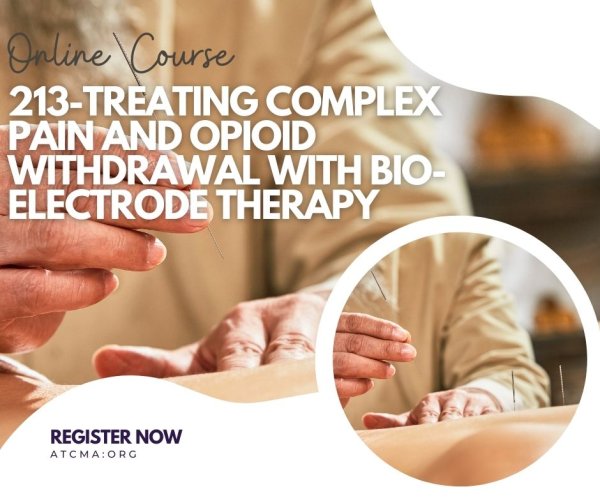
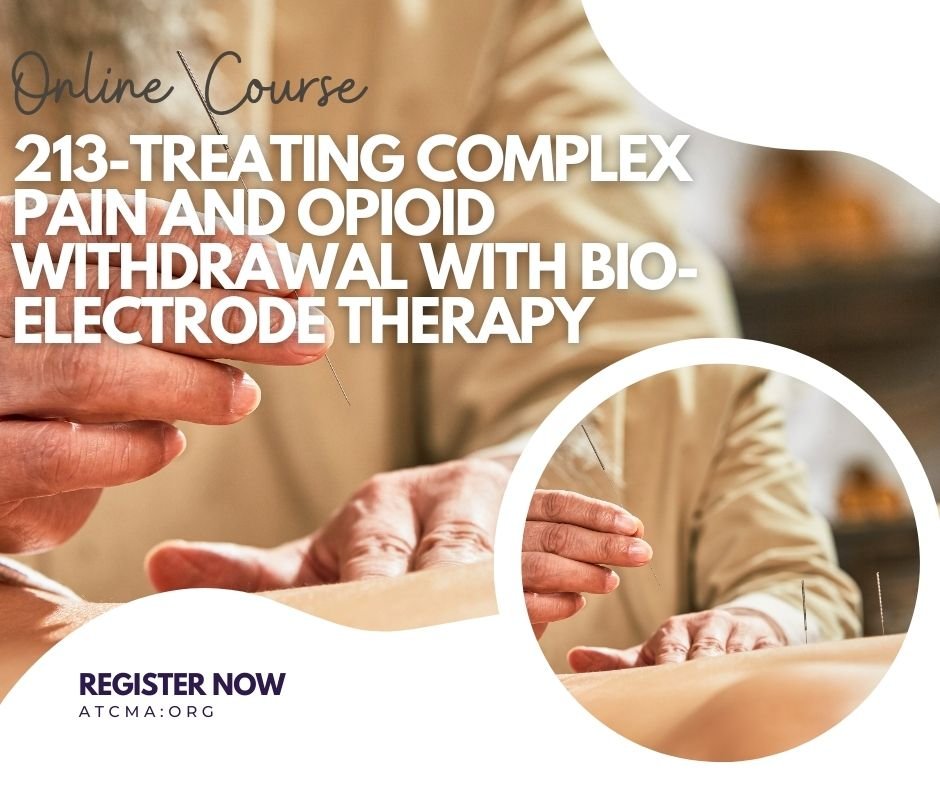
Bio-electrode Therapy is a non-invasive, non-pharmaceutical treatment method for relieving opioid withdrawal, assisting with relapse prevention and many types of pain.
Duration: (2 CEUs)
Topic: Treating Complex Pain and Opioid Withdrawal with Bio-electrode Therapy
Language:English
Les Moncrieff R. Ac.
Abstract
Bio-electrode Therapy is a non-invasive, non-pharmaceutical treatment method for relieving opioid withdrawal, assisting with relapse prevention and many types of pain. By integrating the Western science of electrophysiology and bioelectricity with the Traditional
Chinese Medicine acupuncture meridian theories, we use copper and silver electrodes
as acupuncture point stimulus. Acupuncture points on the body are known to have higher
electrical conductivity than surrounding skin tissue. The human body functions are dependent on electrical factors. Endogenous DC electric fields are important, fundamental
components of development, regeneration, and wound healing. When electrodes are applied to specific acupuncture points, electrons and silver ions are generated, conducting
a micro-current between the electrodes. No external power source is necessary. Disruptions in the normal ion-charge in the meridians and circulation of blood, manifests as pain
and development of disease. With the judicious application of electrodes, a micro-current
can be directed to target injured or diseased organs and tissues. The permeability of the
cell membranes is affected, resulting in a balancing of positive and negative ions (sodium,
potassium, etc.) and the restoration of intracellular fluid levels, replenishment of electrolyte levels, removal of toxins and re-establishment of homeostasis. Bio-electrode Therapy
is an adjunctive therapeutic solution to assist opioid dependent users in their quest for
recovery from addiction.
Speaker’s Bio:
About the speaker:
- Les Moncrieff has been employed as a health care professional for the British Columbia Health Authorities for the past 35 years. As a Registered Acupuncturist since 2000, his specialty is the treatment of addiction and complex pain. Les integrates a wide variety of CAM therapies such as hypnotherapy, energy psychology and various styles of acupuncture in his clinical practice. Les has developed a treatment method called Bio-Electrode therapy in which copper and silver electrode discs or inks are used as an acupuncture point stimulus method to harness the endogenous electrical properties of the body. No needles or electrical devices are required. Based on his clinical experience combining the science of electrophysiology with Chinese medicine meridian theory, an innovative new therapy is now evolving. For the past several years Les has been using Bio-Electrode therapy effectively for the treatment of drug addiction, primarily for opiate withdrawal and complex pain in Vancouver detox centers, community outpatient clinics and treatment programs. Les was a NADA trainer for several years.
Event and Course Registration — Cancellation and Refund Policy
Recorded/On-Demand Online Courses
Once purchased, recorded or on-demand online course content is made available to you immediately. Because access to this digital content begins at the time of purchase, no refunds will be issued for recorded online course purchases, regardless of whether the content has been accessed or completed. This policy is disclosed to you prior to purchase.
Live Events and Courses (In-Person or Live Online)
If you need to cancel your registration for a live event or course, refunds will be issued according to how far in advance ATCMA receives your written cancellation notice, relative to the scheduled date of the event or course:
Notice Received | Refund |
60 days or more before the event/course date | 100% of the amount paid |
30–59 days before the event/course date | 50% of the amount paid |
7–29 days before the event/course date | 25% of the amount paid |
Less than 7 days before the event/course date | No refund |
Cancellation notices must be submitted in writing to info@atcma.org. The date ATCMA receives your notice — not the date it is sent — determines which refund tier applies.
If ATCMA Cancels an Event or Course
If ATCMA cancels a scheduled event or course for any reason, all registered participants will receive a full refund of the amount paid, regardless of the notice periods above. ATCMA is not responsible for any related costs incurred by participants, such as travel or accommodation.
Processing
Approved refunds will be issued within 15 business days of ATCMA receiving your cancellation notice (or of ATCMA's own cancellation of the event/course), using the same payment method originally used, where possible.
Related Courses
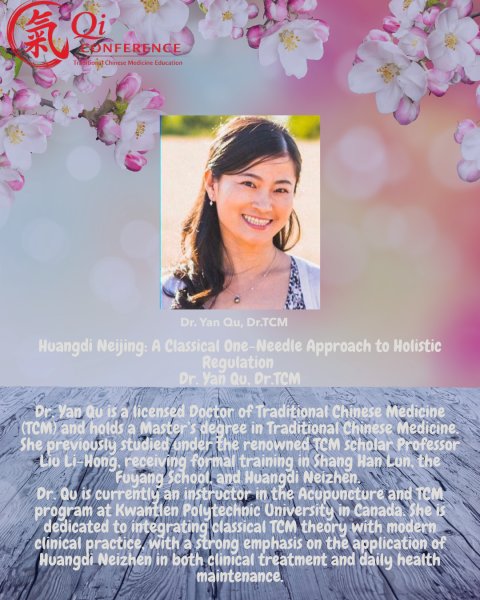
Qi Conference -Huangdi Neizhen: A Classical One-Needle Approach to Holistic Regulation
Huangdi Neizhen is rooted in the holistic medical philosophy of the Huangdi Neijing, with Six-Channel (Liu Jing) Pattern Differentiation serving as its core clinical framework. Emphasizing internal regulation for external disorders and a minimalist needling approach, this method translates classical theory into practical clinical application.
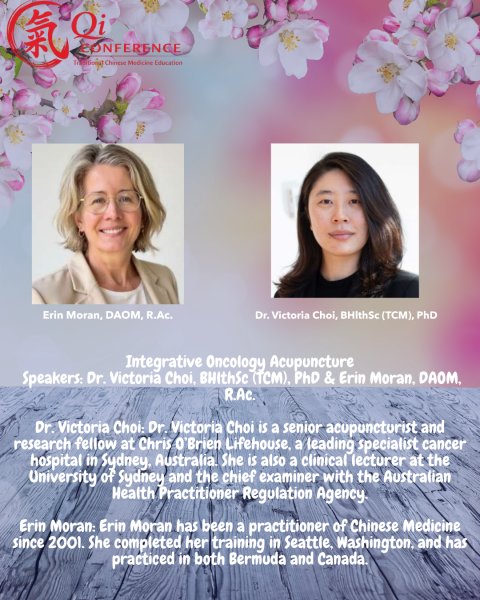
Qi Conference -Integrative Oncology Acupuncture
Grounded in current research and enriched by extensive clinical experience in both private practice and hospital-based integrative oncology settings, this workshop is designed to equip practitioners with the confidence to provide evidence-informed, supportive oncology care.
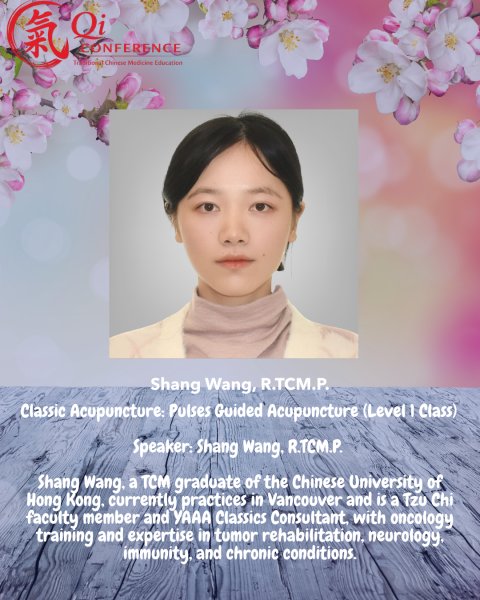
Qi Conference -Classic Acupuncture: Pulses Guided Acupuncture (Level1 Class)
Pulse-guided acupuncture is a fundamental classical acupuncture technique rooted in the Yellow Emperor’s Inner Classic and the Classic of Difficult Issues (Nan Jing). The pulse directly reflects the state of the body’s qi and blood, offering valuable insight into disorders of the meridians and internal organs. When used as a guide, the pulse can help practitioners identify areas of energetic blockage or deficiency with greater precision, allowing for stronger therapeutic effects with fewer needles.
Due to time limitations, this course is offered as a Level 1 class. Even so, the material covered in this lecture can be readily applied in clinical practice and is relevant to many common clinical situations. Participants will study the foundational theories and engage in hands-on practice, including pulse-taking, diagnosis, secondary palpation of pulses and acupuncture points, and needling methods such as long-needle techniques for the abdomen.