British Columbia’s TCM profession is entering a critical period of change. From evolving regulatory requirements to the increasing need for strong public advocacy, it is essential that practitioners understand how to effectively engage government and stay informed on new bylaws and regulations impacting clinical practice. This seminar brings together two important and complementary sessions designed to equip TCM practitioners with the knowledge and tools they need during this time of transition:
Seminar Introduction
British Columbia’s TCM profession is entering a critical period of change. From evolving regulatory requirements to the increasing need for strong public advocacy, it is essential that practitioners understand how to effectively engage government and stay informed on new bylaws and regulations impacting clinical practice.
This seminar brings together two important and complementary sessions designed to equip TCM practitioners with the knowledge and tools they need during this time of transition:
First Section
How to Effectively Communicate with the Government
Presented in English & Mandarin
Former MLA for Richmond South Centre, Henry Yao, a committed supporter of TCM, will share practical insights on communicating with MLAs and other government officials. Drawing from his experience in public service, legislative advocacy, and community leadership, Henry will provide guidance on how TCM professionals can confidently and effectively speak up for issues that matter to them and their patients.
15 mins — Break
Second Section
Talk About Changes in Bylaws and Regulations
Presented in English, Mandarin translation available
ATCMA’s Executive Director, Dr. Melissa Carr, will explain key updates related to the new Complementary Health Professionals Regulations, the proposed CCHPBC Bylaws, and the transition under the HPOA. She will provide clarification on available information and respond to pre-submitted questions from members, helping practitioners better understand what these changes mean for their professional practice.
Please note that while ATCMA will address as many questions as possible, some answers may not yet be available due to ongoing regulatory development. We ask that all participants maintain respectful and constructive communication throughout the discussion.
Join us to strengthen your advocacy skills, enhance your regulatory awareness, and contribute to shaping the future of TCM in British Columbia.
Event and Course Registration — Cancellation and Refund Policy
Recorded/On-Demand Online Courses
Once purchased, recorded or on-demand online course content is made available to you immediately. Because access to this digital content begins at the time of purchase, no refunds will be issued for recorded online course purchases, regardless of whether the content has been accessed or completed. This policy is disclosed to you prior to purchase.
Live Events and Courses (In-Person or Live Online)
If you need to cancel your registration for a live event or course, refunds will be issued according to how far in advance ATCMA receives your written cancellation notice, relative to the scheduled date of the event or course:
Notice Received | Refund |
60 days or more before the event/course date | 100% of the amount paid |
30–59 days before the event/course date | 50% of the amount paid |
7–29 days before the event/course date | 25% of the amount paid |
Less than 7 days before the event/course date | No refund |
Cancellation notices must be submitted in writing to info@atcma.org. The date ATCMA receives your notice — not the date it is sent — determines which refund tier applies.
If ATCMA Cancels an Event or Course
If ATCMA cancels a scheduled event or course for any reason, all registered participants will receive a full refund of the amount paid, regardless of the notice periods above. ATCMA is not responsible for any related costs incurred by participants, such as travel or accommodation.
Processing
Approved refunds will be issued within 15 business days of ATCMA receiving your cancellation notice (or of ATCMA's own cancellation of the event/course), using the same payment method originally used, where possible.
Related Courses
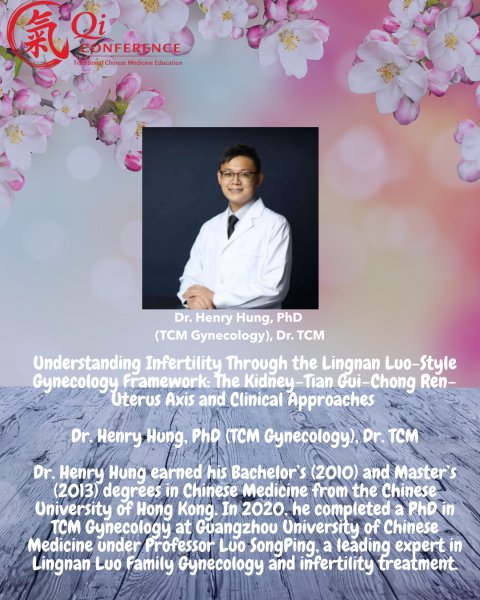
Qi Conference -Understanding Infertility Through the Lingnan Luo-Style Gynecology Framework: The Kidney–Tian Gui–Chong Ren–Uterus Axis and Clinical Approaches
This seminar offers a comprehensive introduction to infertility from the perspective of Lingnan Luo-Style Gynecology. Dr. Henry Hung will present the theoretical foundation developed by Professor Luo Yuankai—the Kidney–Tian Gui–Chong Ren–Uterus axis—and demonstrate how this framework explains the underlying mechanisms of infertility.
The seminar will also cover modern biomedical classifications of infertility and integrate them with Luo-Style pattern differentiation and treatment strategies, providing participants with a clinically relevant and well-rounded understanding of infertility from both traditional and modern perspectives.
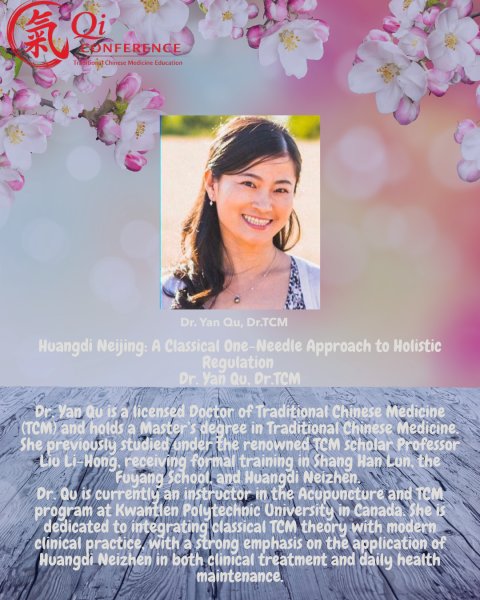
Qi Conference -Huangdi Neizhen: A Classical One-Needle Approach to Holistic Regulation
Huangdi Neizhen is rooted in the holistic medical philosophy of the Huangdi Neijing, with Six-Channel (Liu Jing) Pattern Differentiation serving as its core clinical framework. Emphasizing internal regulation for external disorders and a minimalist needling approach, this method translates classical theory into practical clinical application.
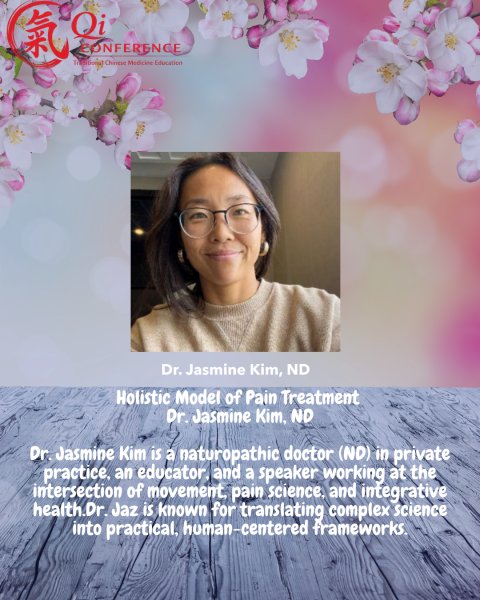
Qi Conference-Holistic Model of Pain Treatment
This presentation explores how both research and lived experience contribute to a more holistic understanding of pain and its management. It traces the evolution from the traditional biomedical model—where pain was viewed primarily as a sign of tissue injury—to the contemporary biopsychosocial model, which recognizes the complex interplay among the nervous system, psychological factors, and social context.