Horizontal and Vertical Acupuncture Methods - Part 2
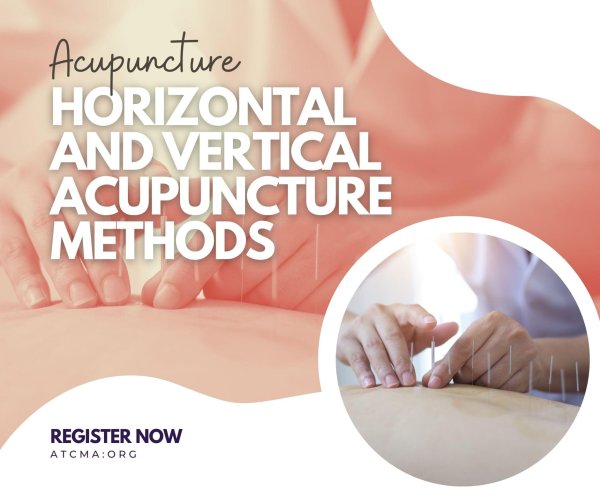
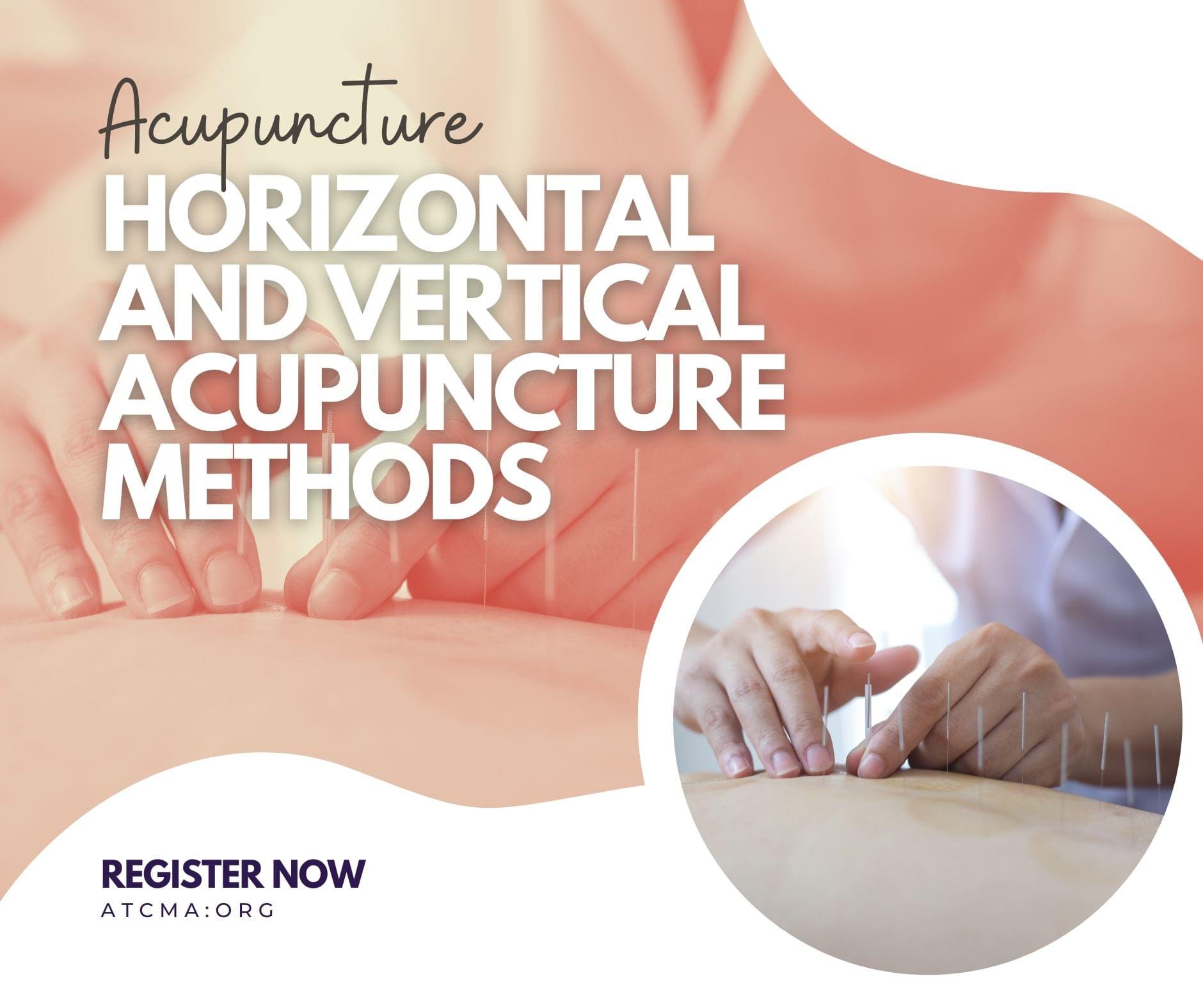
Horizontal and Vertical Acupuncture Methods
One-Point & Two-Point Needle Technique for:
- Acupuncture Method for Myopia (Near-sightedness)
- Eye Disease
- Knee + Character Acupuncture Method
- Collateral Ligament Injury of the Knee Joint
There are fixed acupuncture methods within horizontal and vertical acupuncture techniques that are specific to certain diseases but can also treat different conditions in a similar manner
Time: 2 hours
Language: Chinese
Qian Dejin
Origin: Yangzhou, Jiangsu
Born: 1947, into a family of traditional Chinese medicine practitioners
Professional Titles:
- Associate Chief Physician
- Fifth-generation successor of the authentic Yizhichan Tuina (Finger Zen Massage) technique (inherited from his great-uncle Qian Fuqing and father Qian Jianmin)
- Founder of the Chinese Vertical and Horizontal Needle Technique
- Inheritor of the Qian family's Yizhichan Tuina, recognized as an intangible cultural heritage
- Honorary Dean of the Sino-British Vertical and Horizontal Acupuncture Institute
- President of the Chinese Vertical and Horizontal Needle Technique Research Association
- Vice President of the International Integrative Medicine Society
Contributions:
In the late 1970s, Dejin Qian and his elder brother Shijin Qian co-created the "Chinese Vertical and Horizontal Needle Technique." In 1987, this technique was scientifically validated by an expert panel led by acupuncture master Maoliang Qiu, and it won the Class A Science and Technology Progress Award from the Jiangsu Provincial Health Department the same year. In 2014, the technique was designated as a national continuing education project by the State Administration of Traditional Chinese Medicine.
Publications:
Dejin Qian authored "Chinese Vertical and Horizontal Needle Technique," which was published in 2017. Alongside Professor Zhao Yi, former Vice President of the Chinese Tuina Association, he co-authored "Yizhichan Tuina," published in 2020. This book marked the end of the era when Tuina lacked its own specialized theoretical foundation. The Qian family's Yizhichan Tuina was recognized as a national continuing education project by the State Administration of Traditional Chinese Medicine in 2017.
Event and Course Registration — Cancellation and Refund Policy
Recorded/On-Demand Online Courses
Once purchased, recorded or on-demand online course content is made available to you immediately. Because access to this digital content begins at the time of purchase, no refunds will be issued for recorded online course purchases, regardless of whether the content has been accessed or completed. This policy is disclosed to you prior to purchase.
Live Events and Courses (In-Person or Live Online)
If you need to cancel your registration for a live event or course, refunds will be issued according to how far in advance ATCMA receives your written cancellation notice, relative to the scheduled date of the event or course:
Notice Received | Refund |
60 days or more before the event/course date | 100% of the amount paid |
30–59 days before the event/course date | 50% of the amount paid |
7–29 days before the event/course date | 25% of the amount paid |
Less than 7 days before the event/course date | No refund |
Cancellation notices must be submitted in writing to info@atcma.org. The date ATCMA receives your notice — not the date it is sent — determines which refund tier applies.
If ATCMA Cancels an Event or Course
If ATCMA cancels a scheduled event or course for any reason, all registered participants will receive a full refund of the amount paid, regardless of the notice periods above. ATCMA is not responsible for any related costs incurred by participants, such as travel or accommodation.
Processing
Approved refunds will be issued within 15 business days of ATCMA receiving your cancellation notice (or of ATCMA's own cancellation of the event/course), using the same payment method originally used, where possible.
Related Courses
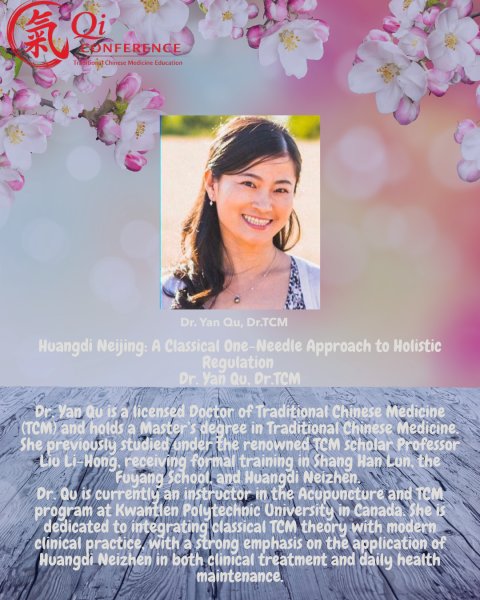
Qi Conference -Huangdi Neizhen: A Classical One-Needle Approach to Holistic Regulation
Huangdi Neizhen is rooted in the holistic medical philosophy of the Huangdi Neijing, with Six-Channel (Liu Jing) Pattern Differentiation serving as its core clinical framework. Emphasizing internal regulation for external disorders and a minimalist needling approach, this method translates classical theory into practical clinical application.
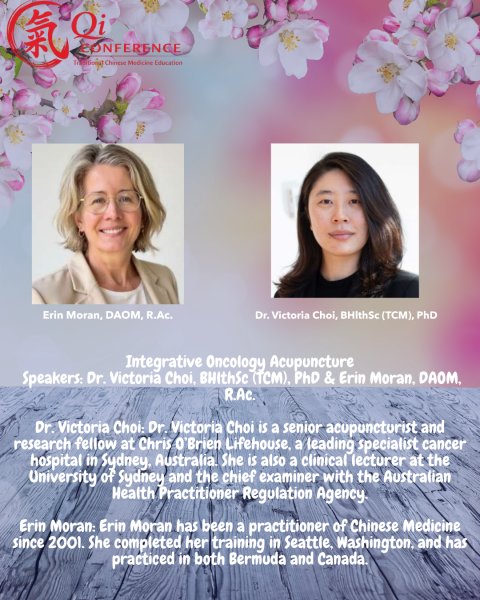
Qi Conference -Integrative Oncology Acupuncture
Grounded in current research and enriched by extensive clinical experience in both private practice and hospital-based integrative oncology settings, this workshop is designed to equip practitioners with the confidence to provide evidence-informed, supportive oncology care.
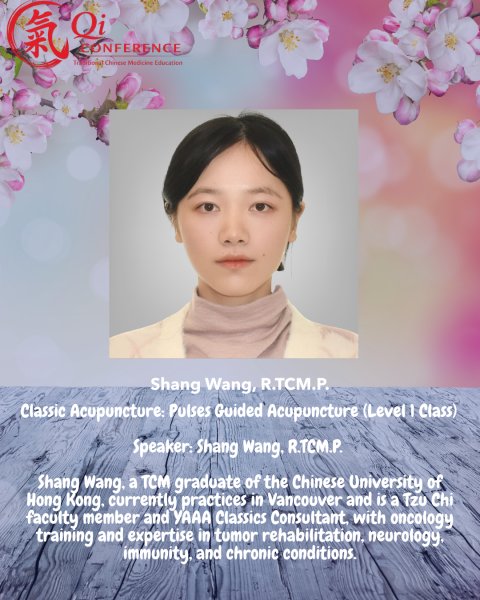
Qi Conference -Classic Acupuncture: Pulses Guided Acupuncture (Level1 Class)
Pulse-guided acupuncture is a fundamental classical acupuncture technique rooted in the Yellow Emperor’s Inner Classic and the Classic of Difficult Issues (Nan Jing). The pulse directly reflects the state of the body’s qi and blood, offering valuable insight into disorders of the meridians and internal organs. When used as a guide, the pulse can help practitioners identify areas of energetic blockage or deficiency with greater precision, allowing for stronger therapeutic effects with fewer needles.
Due to time limitations, this course is offered as a Level 1 class. Even so, the material covered in this lecture can be readily applied in clinical practice and is relevant to many common clinical situations. Participants will study the foundational theories and engage in hands-on practice, including pulse-taking, diagnosis, secondary palpation of pulses and acupuncture points, and needling methods such as long-needle techniques for the abdomen.