
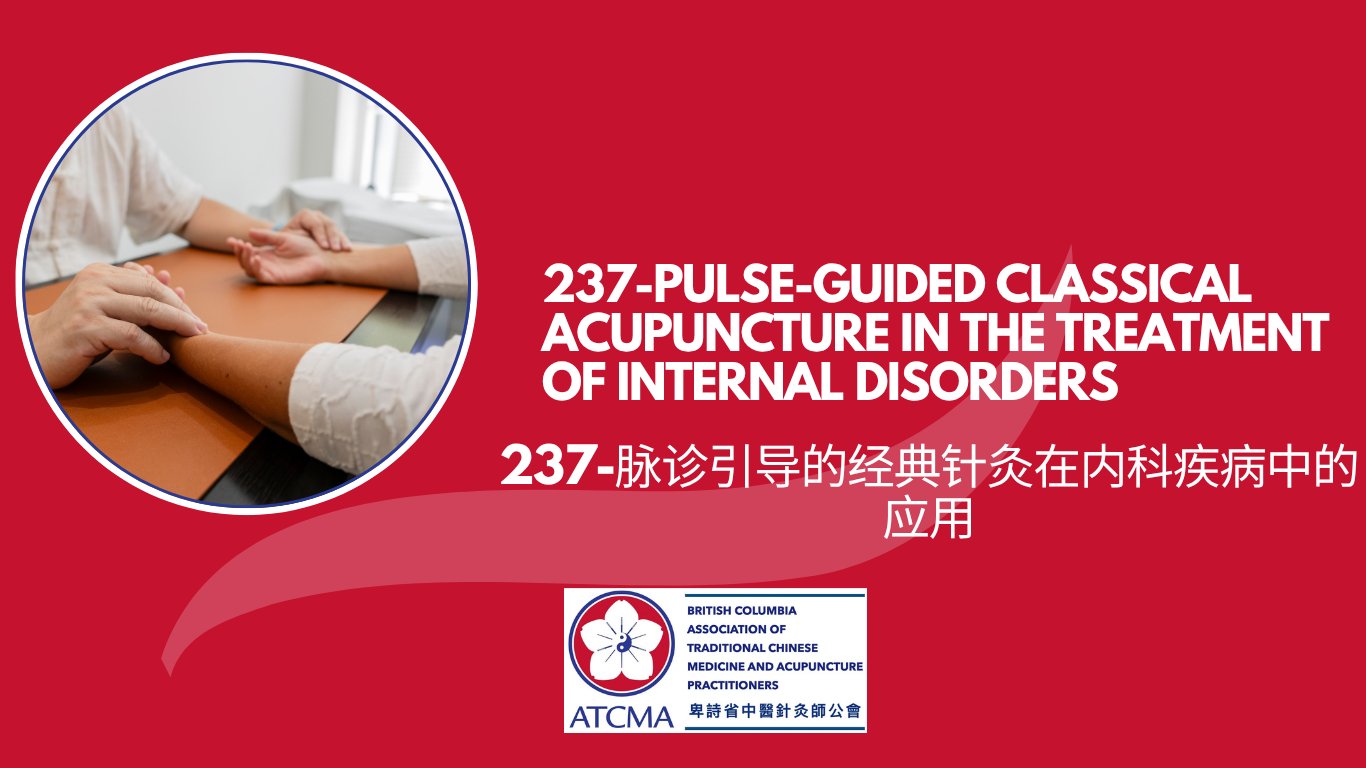
This lecture by Shang Wang explores pulse-guided classical acupuncture for internal disorders, integrating theories from the Huangdi Neijing, Nanjing, and Mai Jing. It highlights how pulse diagnosis informs point selection and treatment strategies, emphasizing individualized, dynamic approaches that restore balance—“以平為期”—and bridge classical wisdom with modern clinical practice.
Topic: Pulse-Guided Classical Acupuncture in the Treatment of Internal Disorders
Speaker: Shang Wang;
Shang Wang graduated from the Chinese University of Hong Kong majoring in Chinese Medicine. She currently maintains clinical practice in Vancouver and holds a faculty position at Tzu Chi International College of Traditional Chinese Medicine. At the same time, she serves as the Classics Consultant in the Academic Department of the Young American Association of Acupuncturists (YAAA). She previously had internship at the Affiliated Hospitals of Guangzhou University of Chinese Medicine, and in 2025 undertook advanced training in the Oncology Department of Jiangsu University Affiliated Hospital.
Clinically, Shang Wang specializes in both common and refractory conditions, with a focus on tumor rehabilitation, neurological disorders, immune-related diseases, and a wide range of chronic internal conditions.
As for her teaching, classes are structured around the systematic study of classical texts, supplemented by case analyses and practical training, with the aim of cultivating in students academic rigor and independent clinical judgment.
Lecture Outline
I. Introduction
- Origins of acupuncture in the Huangdi Neijing and Nanjing
- Defining “Classical Acupuncture”
- Theoretical Foundations and modern studies
- The role of pulse in clinical decision-making
- Relationships between meridians, viscera, and Qi & Blood
- Guiding point selection and tonification/reduction through pulse findings
- Why emphasize pulse-guided methods: the clinical value of linking pulse diagnosis to acupuncture treatment “以平為期”
II. Pulse Taking
- The Huangdi Neijing
- Visceral pulse imaging
- 3 parts 9 pulses (三部九候)
- Renying Cunkou pulse
- The Nanjing
- Visceral pulse imaging and its depth (chapter 4, chapter 5)
- Yin Yang pulse (chapter 6, chapter 7)
- 10 changes in pulse (chapter 10)
- Mai Jing
- Qi Kou Jiu Dao Pulse
III. Treatment according to the pulse
- Holistic view: regulating qi and blood dynamics of organs and meridians
- Flexible differentiation: tailoring points and techniques to pulse changes, moving beyond fixed prescriptions, adapting to moment-to-moment conditions
- Broader scope: not limited to pain management, but extended to complex internal disorders
IV. Case Studies
V. VI. Conclusion & Outlook
- Contemporary relevance of pulse-guided classical acupuncture
- Integrating classical principles into modern education and practice
- Future directions for research and opportunities for international collaboration
Event and Course Registration — Cancellation and Refund Policy
Recorded/On-Demand Online Courses
Once purchased, recorded or on-demand online course content is made available to you immediately. Because access to this digital content begins at the time of purchase, no refunds will be issued for recorded online course purchases, regardless of whether the content has been accessed or completed. This policy is disclosed to you prior to purchase.
Live Events and Courses (In-Person or Live Online)
If you need to cancel your registration for a live event or course, refunds will be issued according to how far in advance ATCMA receives your written cancellation notice, relative to the scheduled date of the event or course:
Notice Received | Refund |
60 days or more before the event/course date | 100% of the amount paid |
30–59 days before the event/course date | 50% of the amount paid |
7–29 days before the event/course date | 25% of the amount paid |
Less than 7 days before the event/course date | No refund |
Cancellation notices must be submitted in writing to info@atcma.org. The date ATCMA receives your notice — not the date it is sent — determines which refund tier applies.
If ATCMA Cancels an Event or Course
If ATCMA cancels a scheduled event or course for any reason, all registered participants will receive a full refund of the amount paid, regardless of the notice periods above. ATCMA is not responsible for any related costs incurred by participants, such as travel or accommodation.
Processing
Approved refunds will be issued within 15 business days of ATCMA receiving your cancellation notice (or of ATCMA's own cancellation of the event/course), using the same payment method originally used, where possible.
Related Courses
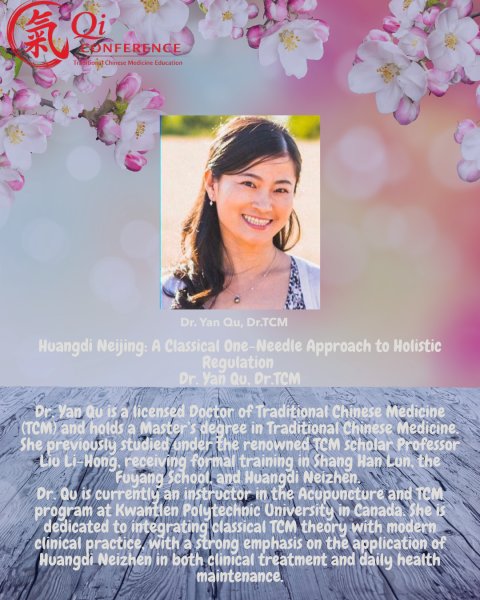
Qi Conference -Huangdi Neizhen: A Classical One-Needle Approach to Holistic Regulation
Huangdi Neizhen is rooted in the holistic medical philosophy of the Huangdi Neijing, with Six-Channel (Liu Jing) Pattern Differentiation serving as its core clinical framework. Emphasizing internal regulation for external disorders and a minimalist needling approach, this method translates classical theory into practical clinical application.
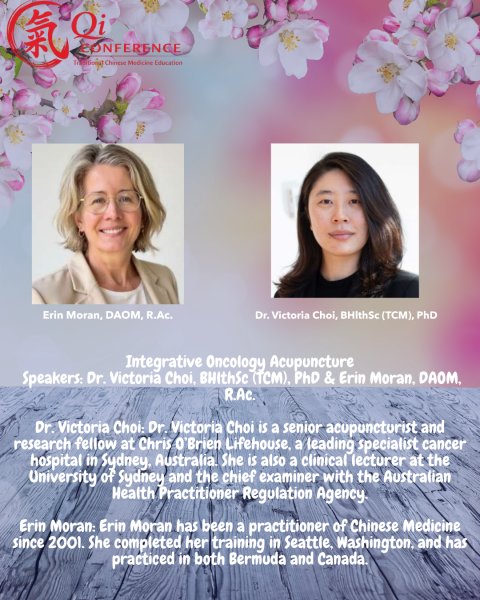
Qi Conference -Integrative Oncology Acupuncture
Grounded in current research and enriched by extensive clinical experience in both private practice and hospital-based integrative oncology settings, this workshop is designed to equip practitioners with the confidence to provide evidence-informed, supportive oncology care.
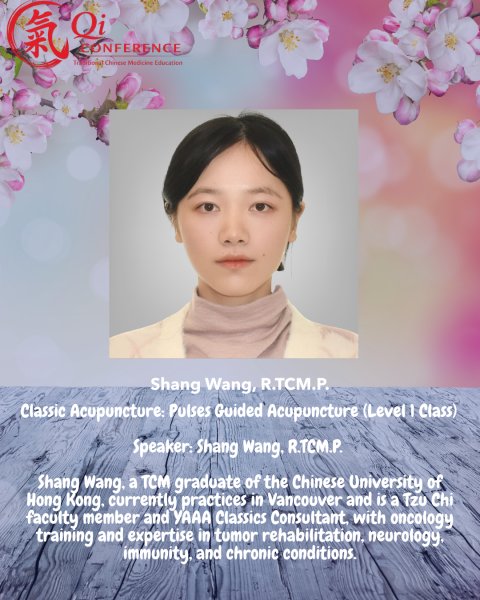
Qi Conference -Classic Acupuncture: Pulses Guided Acupuncture (Level1 Class)
Pulse-guided acupuncture is a fundamental classical acupuncture technique rooted in the Yellow Emperor’s Inner Classic and the Classic of Difficult Issues (Nan Jing). The pulse directly reflects the state of the body’s qi and blood, offering valuable insight into disorders of the meridians and internal organs. When used as a guide, the pulse can help practitioners identify areas of energetic blockage or deficiency with greater precision, allowing for stronger therapeutic effects with fewer needles.
Due to time limitations, this course is offered as a Level 1 class. Even so, the material covered in this lecture can be readily applied in clinical practice and is relevant to many common clinical situations. Participants will study the foundational theories and engage in hands-on practice, including pulse-taking, diagnosis, secondary palpation of pulses and acupuncture points, and needling methods such as long-needle techniques for the abdomen.
Category: Online Course
Topics: Acupuncture, Internal Disorders
Published: 14 November 2025