Traditional Chinese Medicine (TCM) is deeply intertwined with ancient Chinese philosophy, drawing upon fundamental concepts such as Yin-Yang, the Five Elements (Wu Xing), and the Four Pillars of Destiny (Ba Zi). Historically, traditional Chinese doctors (Lang Zhong) were well-versed in Ba Zi, as it was considered essential in diagnosing and treating patients.
Seminar Details
Topic: Exploring Traditional Culture in Chinese Medicine and Health-Nurturing Practices
Time: 3 hours
Language: Chinese
Introduction
Traditional Chinese Medicine (TCM) is deeply intertwined with ancient Chinese philosophy, drawing upon fundamental concepts such as Yin-Yang, the Five Elements (Wu Xing), and the Four Pillars of Destiny (Ba Zi). Historically, traditional Chinese doctors (Lang Zhong) were well-versed in Ba Zi, as it was considered essential in diagnosing and treating patients.
Beyond TCM, traditional Chinese practices such as Feng Shui, destiny analysis, and Daoist philosophy have long influenced human health and well-being. These interconnected disciplines share a common foundation in Yin-Yang and Five Elements Theory, providing a holistic approach to health preservation, disease prevention, and life cultivation.
This seminar will explore what is TCM and how integrating Ba Zi, Feng Shui, and TCM diagnostics can enhance modern healthcare practices.
Speaker: Wu Fangzhe
Wu Fangzhe (Daoist name: Gao Zhe) is a 27th-generation disciple of the Longmen sect of Quanzhen Daoism and a renowned expert in traditional Chinese metaphysics and TCM-related cultural practices.
Born into a distinguished family of TCM practitioners, Wu Fangzhe’s lineage traces back to Wu Qian, a senior Imperial Court Physician during the Qing Dynasty under Emperor Qianlong. Deeply influenced by his family’s medical heritage, he has devoted his life to studying and practicing Daoist Five Arts (Mountain, Medicine, Divination, Fate, and Physiognomy). His expertise lies in integrating Ba Zi, Physiognomy, Feng Shui, and TCM to provide holistic health insights.
- Credentials and Expertise
- Vice President of Minmeng Sinology Institute
- Secretary-General of the China Yijing Research Association
- Senior Lecturer at Guangzhou Daoist Association
- Academic Advisor to multiple cultural and international organizations
With his extensive background in Daoist philosophy, classical Chinese medicine, and metaphysical studies, Wu Fangzhe will share unique insights into the interconnectedness of TCM and traditional Chinese cultural practices.
Event and Course Registration — Cancellation and Refund Policy
Recorded/On-Demand Online Courses
Once purchased, recorded or on-demand online course content is made available to you immediately. Because access to this digital content begins at the time of purchase, no refunds will be issued for recorded online course purchases, regardless of whether the content has been accessed or completed. This policy is disclosed to you prior to purchase.
Live Events and Courses (In-Person or Live Online)
If you need to cancel your registration for a live event or course, refunds will be issued according to how far in advance ATCMA receives your written cancellation notice, relative to the scheduled date of the event or course:
Notice Received | Refund |
60 days or more before the event/course date | 100% of the amount paid |
30–59 days before the event/course date | 50% of the amount paid |
7–29 days before the event/course date | 25% of the amount paid |
Less than 7 days before the event/course date | No refund |
Cancellation notices must be submitted in writing to info@atcma.org. The date ATCMA receives your notice — not the date it is sent — determines which refund tier applies.
If ATCMA Cancels an Event or Course
If ATCMA cancels a scheduled event or course for any reason, all registered participants will receive a full refund of the amount paid, regardless of the notice periods above. ATCMA is not responsible for any related costs incurred by participants, such as travel or accommodation.
Processing
Approved refunds will be issued within 15 business days of ATCMA receiving your cancellation notice (or of ATCMA's own cancellation of the event/course), using the same payment method originally used, where possible.
Related Courses
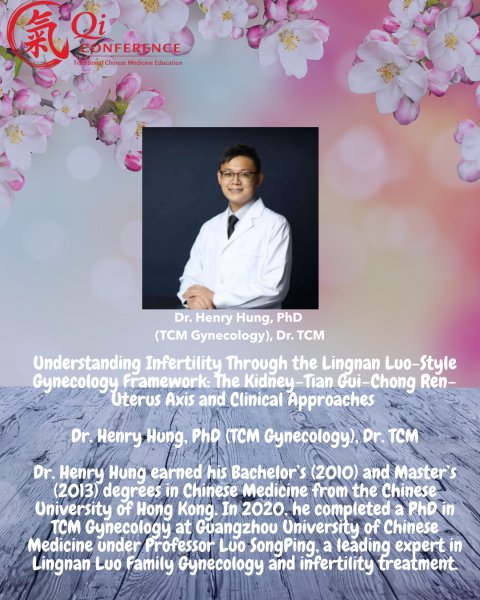
Qi Conference -Understanding Infertility Through the Lingnan Luo-Style Gynecology Framework: The Kidney–Tian Gui–Chong Ren–Uterus Axis and Clinical Approaches
This seminar offers a comprehensive introduction to infertility from the perspective of Lingnan Luo-Style Gynecology. Dr. Henry Hung will present the theoretical foundation developed by Professor Luo Yuankai—the Kidney–Tian Gui–Chong Ren–Uterus axis—and demonstrate how this framework explains the underlying mechanisms of infertility.
The seminar will also cover modern biomedical classifications of infertility and integrate them with Luo-Style pattern differentiation and treatment strategies, providing participants with a clinically relevant and well-rounded understanding of infertility from both traditional and modern perspectives.
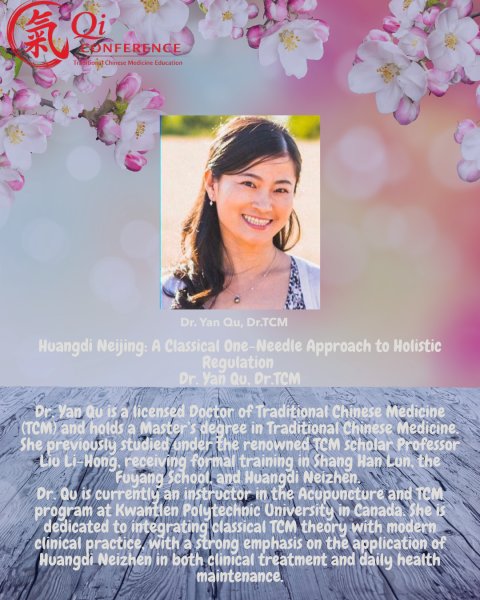
Qi Conference -Huangdi Neizhen: A Classical One-Needle Approach to Holistic Regulation
Huangdi Neizhen is rooted in the holistic medical philosophy of the Huangdi Neijing, with Six-Channel (Liu Jing) Pattern Differentiation serving as its core clinical framework. Emphasizing internal regulation for external disorders and a minimalist needling approach, this method translates classical theory into practical clinical application.
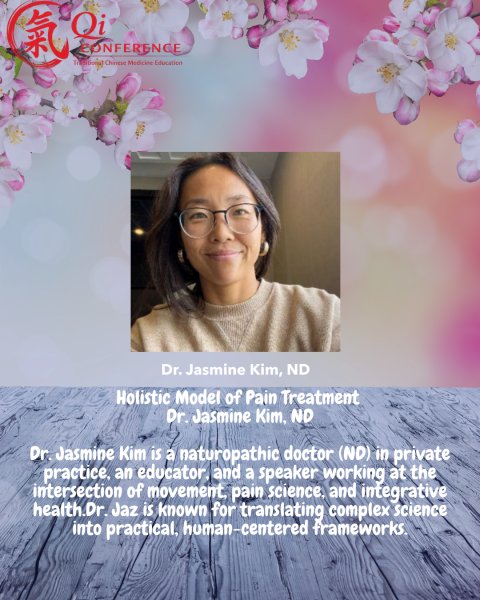
Qi Conference-Holistic Model of Pain Treatment
This presentation explores how both research and lived experience contribute to a more holistic understanding of pain and its management. It traces the evolution from the traditional biomedical model—where pain was viewed primarily as a sign of tissue injury—to the contemporary biopsychosocial model, which recognizes the complex interplay among the nervous system, psychological factors, and social context.